
How to Become a Forensic Scientist
Updated September 17, 2026
Most crime labs will hire a forensic scientist with a bachelor’s degree in chemistry, biology, or forensic science, though regulated specialties like forensic pathology and forensic psychology carry their own professional licensing requirements. Professional certification is available in various forensic specialties through specialty certification boards; requirements vary by discipline and employer. As of May 2025, BLS reports a $72,060 median wage for forensic science technicians.
Forget the one-hour lab miracles on television. Real forensic work means running the same test the same way every single time, documenting every step so a defense attorney can’t pick it apart in court, and being able to explain DNA transfer to twelve jurors who’ve never touched a pipette. If you’re good at science, patient with process, and fascinated by how physical evidence tells a story, this is a career worth a hard look.
Forensic scientists apply chemistry, biology, and physics to gather, test, and analyze evidence from crime scenes and other locations. Your analysis might help apprehend a suspect, determine a cause of death, locate a missing person, establish fault in a car accident, or show whether discharge from a manufacturing plant caused biological harm.


This page covers:
What Is Forensic Science?
The American Academy of Forensic Sciences (AAFS) defines forensic science as any science “used for the purposes of the law.” In practice, it’s the application of the scientific method to recognize, identify, and evaluate physical evidence for legal purposes, in both criminal and civil law.
You’ll be the person who can explain to investigators and juries the science behind the evidence: how blood spatter patterns form, what skid marks mean, what DNA indicates, why a walkway failed and killed a pedestrian, or how trace evidence pins down the tiniest details of a crime scene. The AAFS is clear that this isn’t just a law-enforcement tool. It’s an objective search for the truth, usable on any side of a legal matter.
“Forensic scientist” and “forensic science technician” are used almost interchangeably, and there isn’t one nationally standardized line between them. BLS tracks both under a single occupation, Forensic Science Technicians, which covers people who collect and analyze evidence and may specialize in either crime-scene work or laboratory analysis. BLS reports that the role typically requires a bachelor’s degree. Some employers reserve “forensic scientist” for lab-based analytical roles and use “technician” for crime-scene work, but that split isn’t consistent across agencies, so confirm how a specific employer defines the role before assuming which path you’re on.
Forensic science also gets confused with criminology, but they’re not the same field. Criminology is the sociological study of why crime happens. Forensic science is factual analysis rooted in physics, biology, and chemistry, not behavioral theory. And “criminalistics” (the analysis of physical evidence) shouldn’t be confused with “criminology” either, despite how similar they sound. A criminalist is simply one type of forensic scientist.
What Does a Forensic Scientist Do?
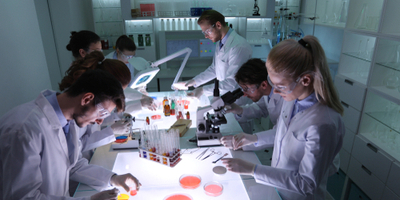
Most of your work happens in a lab, not at a crime scene. You’ll apply physics, chemistry, and biology to evidence that’s already been collected, though some forensic scientists do on-site analysis when a case calls for it. Because forensic evidence shows up in nearly any legal matter, expect to testify in court and lay out your findings to people with no science background.
Forget the idea that this field is only murder investigations. Forensic scientists work civil disputes (a divorce case), civic matters (a company sued for violating clean air standards), and structural failures (a forensic engineer determining what caused a bridge to collapse). A handwriting expert who authenticates a signature is one type of forensic scientist. So is a forensic odontologist, though bite-mark comparison specifically has faced significant scientific criticism in recent years, and courts increasingly scrutinize it as an identification method rather than treating it as settled science.
Duties of a Forensic Scientist
Expect to work in a laboratory setting, running tests on collected evidence and coordinating with crime scene investigators and other forensic staff. Specific duties include:
Where Do Forensic Scientists Work?
Most positions sit within law enforcement agencies or county and state forensics labs. You’ll also find forensic scientists inside federal agencies, including the Department of Justice (the FBI), the Department of the Treasury, Health and Human Services, and the Postal Inspection Service, all of which typically want high-level technical specialties.
Hospitals hire forensic scientists too, often alongside social workers and counselors who treat crime victims. A medical or nursing background paired with forensics training is a real path into that setting.
Specialty Areas
Specialty requirements vary widely and don’t follow one universal rule. Some forensic lab specialties accept a bachelor’s degree plus the right science coursework, while regulated professions like forensic pathology and forensic psychology require far more, including a separate professional license. A few examples:
Forensic Scientist Salary
Pay depends heavily on specialty, education, and location. As of May 2025, the Bureau of Labor Statistics reports a median annual wage of $72,060 for Forensic Science Technicians, the closest published occupation to a general lab-based forensic scientist role.
Forensic pathologists are physicians, and BLS folds them into a broader occupation, Physicians, All Other, which had a May 2025 median of $265,930. That figure covers the entire broad occupation group, not a forensic-pathologist-specific median, so treat it as a general reference point for physician-level pay rather than an exact number for the specialty.
BLS doesn’t publish a separate wage line for forensic toxicologists. If that’s the specialty you’re targeting, get current pay data directly from employers or professional associations in that field.
Forensic Scientist Career Outlook
Outlook varies by specialty and education. For forensic science technicians specifically, the BLS Occupational Outlook Handbook projects 13% employment growth from 2025 to 2035, much faster than average, with about 2,800 openings projected each year. That figure covers the technician occupation, not forensic scientists specifically, but it’s the closest indicator of demand across the field.
May 2025 US Bureau of Labor Statistics salary figures for Forensic Science Technicians and Physicians, All Other. Employment growth projections (2025-35) for Forensic Science Technicians are also from the BLS Occupational Outlook Handbook. Figures reflect national data, not school-specific information. Conditions in your area may vary. Data accessed September 2026.
How to Become a Forensic Scientist
Three things stand between you and a lab coat: the degree, the training, and, for some specialties, a certification. Here’s roughly the order you’ll go through it.
- Complete a degree program in a natural science or forensic science
- Get on-the-job training
- Consider certification, if your specialty calls for it
Get Your Degree
You’ll need a degree in forensic science, a natural science like chemistry or biology, or engineering, depending on the specialty you’re chasing. Requirements vary by employer and specialty rather than following one universal rule.
One more distinction worth knowing: a general crime-lab forensic scientist usually doesn’t need an individual state license to practice. But specialties that overlap with an already-licensed profession, forensic pathology (medicine), forensic psychology (psychology), forensic odontology (dentistry), carry that profession’s state-specific licensing requirements on top of any forensic-specific training.
Get On-the-Job Training
BLS notes that forensic science technicians may need moderate-term on-the-job training to reach full competency, and that holds true more broadly across the field. Coursework teaches you techniques, but applying them under supervision is what builds real judgment. Forensic cases rarely repeat themselves exactly, so exposure to a range of scenarios sharpens the analytical instincts you’ll rely on.
Look for chances to take on new tasks and learn emerging techniques. Get involved with organizations like the Young Forensic Scientists Forum to find professional development opportunities and connect with people already doing the job.
Understand Certification Options
Certification in forensic science isn’t governed by one national body or a single required exam. Requirements vary by specialty, employer, laboratory, and jurisdiction. Some credentials are entirely voluntary, while certain labs or positions may require or prefer a specific certification before you can testify or sign off on casework.
Certification is typically specialty-specific. Toxicologists can pursue it through the American Board of Forensic Toxicology. Document examiners have the American Board of Forensic Document Examiners. Odontologists have their own board. Most disciplines follow this pattern: a dedicated certifying body for that specialty, not one all-purpose “forensic scientist” credential.
The Forensic Specialties Accreditation Board (FSAB) doesn’t certify individuals or accredit degree programs. It accredits some of these specialty certification boards, evaluating whether a certifying body’s standards meet FSAB’s criteria. Degree programs are a separate matter: AAFS’s Forensic Science Education Programs Accreditation Commission (FEPAC) is the body that accredits qualifying bachelor’s and master’s programs in forensic science. You can find a current list of FSAB-accredited certification boards on the Department of Justice website.
Online Programs
You can find associate, bachelor’s, and master’s forensic science programs online. Bachelor’s and master’s-level forensic science programs can carry FEPAC accreditation, so check a specific program’s FEPAC status directly rather than assuming every online program has it. Know going in that some programs, especially at the master’s level, involve a hands-on component you can’t complete remotely.
Online formats give you scheduling flexibility, and if you’re already working in the field, you can apply what you learn on the job in real time. What you’ll miss is the in-person interaction with peers and professors, and you’ll need real self-discipline to stay on track without a classroom forcing the issue. If your interest leans toward computer forensics, an online format can work well; if it leans toward heavy lab work, an on-campus program is usually the better fit.
Spotlight: Featured Forensic Scientist Degree Programs
The following schools offer forensic science degree programs at the master’s level. Confirm current accreditation status, tuition, and program details directly with each school before enrolling, since these details change from year to year.
Marshall University
Marshall University, in Huntington, West Virginia, offers a Master of Science in Forensic Science accredited through FEPAC. You can choose a thesis or a non-thesis capstone track, with emphasis areas in DNA analysis, forensic chemistry, crime scene investigation, and digital forensics. The degree runs 38 credits over five semesters full-time. The department’s ties to the West Virginia State Police give students access to state crime lab facilities and a campus-based DNA lab. A separate graduate certificate in digital forensics is also available.
Degrees offered: Master of Science in Forensic Science.
Tuition: In-state (West Virginia): $373 per credit hour. Out-of-state: $934 per credit hour. Confirm current rates with the program.
Florida International University
FIU’s master’s in forensic science (Miami) runs an interdisciplinary curriculum aimed at government agencies, research firms, labs, and consultancies. Expect about two years full-time, mixing traditional semester classes with shorter workshop-style ones. FIU’s bachelor’s and certificate programs in forensic science carry FEPAC accreditation; confirm current accreditation status for the master’s-level tracks directly with the program. FIU also offers a professional science master’s in forensic science, plus two specialized Ph.D. tracks in biology and chemistry with a forensics emphasis.
Degrees offered: Master of Science in Forensic Science. Professional Science Master in Forensic Science. Master of Science in Forensic Science/Ph.D. in Biology. Ph.D. in Chemistry and Biochemistry, Forensic Track.
Tuition: In-state: $380 per credit hour. Out of state: $520 per credit hour. Confirm current rates with the program.
Virginia Commonwealth University
VCU, in Richmond, offers a master’s in forensic science with concentration tracks in forensic biology, forensic chemistry/drugs and toxicology, forensic chemistry/trace, and forensic physical evidence. You’ll earn 27 core credits before moving into 15 credits of specialization. The full-time program takes two years, and members of the Virginia Division of Forensic Science Central Laboratory teach some of the classes.
Degrees offered: Master of Science in Forensic Science. Also offers a Bachelor of Science in Forensic Science.
Tuition: In-state: $701 per credit hour. Out of state: $1,234 per credit hour. Confirm current rates with the program.
Michigan State University
Michigan State, in East Lansing, runs one of the longest-established forensic science programs in the country. MSU’s master’s in forensic science program includes concentrations in forensic chemistry and forensic biology, with an active research arm that students can join. The program requires a thesis. MSU also offers a Ph.D. in forensic anthropology.
Degrees offered: Master of Science in Forensic Science. Also offers a Doctorate in Forensic Anthropology.
Tuition: In-state: $755.50 per credit hour. Out-of-state: $1,485 per credit hour. Confirm current rates with the program.
Sam Houston State University
Sam Houston State, in Huntsville, offers a FEPAC-accredited Master of Science in Forensic Science, the first accredited program in Texas. The department reports a 10-year average job placement rate of over 94% in forensic careers, per the program’s own website. You can personalize your plan of study around specific career goals. The program requires 44 credits, plus an internship and thesis to graduate, and offers scholarships and assistantships based on financial need.
Degrees offered: Master of Science in Forensic Science. Also offers a Ph.D. in Forensic Science.
Tuition: In-state: $435 per credit hour. Out-of-state: $850 per credit hour. Confirm current rates with the program.
George Mason University
George Mason, outside Washington, D.C., offers a master’s program in forensic science covering theory and practice. You can concentrate in crime scene investigation, forensic chemistry analysis, forensic biology analysis, or forensic/biometric identity analysis. The D.C. location provides access to federal and corporate forensic labs.
Degrees offered: Master of Science in Forensic Science. Master of Science in Digital Forensics. Also offers a Bachelor of Science in Forensic Science, plus graduate certificates in Forensic Science and Forensic Accounting.
Tuition: In-state: $589 per credit hour. Out-of-state: $1,447 per credit hour. Confirm current rates with the program.
Frequently Asked Questions
What degree do I need to become a forensic scientist?
It depends on the specialty and employer, not a single universal rule. Entry-level crime lab work often accepts a bachelor’s degree in chemistry, biology, or forensic science. Specialties that overlap with a licensed profession, like forensic pathology or forensic psychology, require that profession’s own education and licensing path on top of forensic training.
Is a forensic scientist the same job as a forensic science technician?
There’s no single nationally standardized line between the two titles. BLS tracks both under one occupation, Forensic Science Technicians, which includes people who both collect evidence at scenes and analyze it in labs. Some employers use “forensic scientist” for lab-based roles and “technician” for scene work, but that split isn’t consistent, so check how a specific employer defines the position.
Do forensic scientists have to go to crime scenes?
Most forensic scientists work primarily in a lab analyzing evidence that’s already been collected, though this varies by employer and role, and some do on-site work when a case requires it.
Do you need to be certified to work as a forensic scientist?
It depends on the specialty, employer, and jurisdiction. Some labs and positions require or prefer a specific certification before you can testify or sign off on results; others don’t require one at all. Certification is specialty-specific, issued by boards like the American Board of Forensic Toxicology or the American Board of Forensic Document Examiners, not by one universal forensic-scientist credential.
How much do forensic scientists make?
As of May 2025, BLS reports a $72,060 median wage for Forensic Science Technicians, the closest tracked occupation to a general forensic scientist role. Physicians classified under Physicians, All Other, which includes forensic pathologists, had a broader May 2025 median of $265,930, though that figure isn’t pathologist-specific. BLS doesn’t publish separate wage data for forensic toxicologists.
Key Takeaways
- Degree requirements vary by specialty and employer – A bachelor’s covers many entry-level lab and technician roles, while forensic pathology, psychology, and other regulated specialties carry their own professional licensing requirements.
- Certification is specialty-specific, not universal – There’s no single forensic-scientist certification. Requirements depend on your specialty, employer, and jurisdiction.
- FSAB and FEPAC do different jobs – FSAB accredits certification boards; FEPAC accredits academic degree programs.
- Pay varies sharply by specialty – BLS reports a May 2025 median of $72,060 for Forensic Science Technicians and a broader $265,930 median for the physician category that includes forensic pathologists.
- Demand is strong for lab technicians – BLS projects 13% employment growth for forensic science technicians from 2025 to 2035, with about 2,800 average annual openings.
If you’re weighing whether a certification is worth pursuing, look at what the certifying board in your target specialty actually requires before committing the time and cost. Every specialty runs its own process, so verify with the board that matters for your intended role.
- Alabama
- Alaska
- Arizona
- Arkansas
- California
- Colorado
- Connecticut
- Delaware
- District of Columbia
- Florida
- Georgia
- Hawaii
- Idaho
- Illinois
- Indiana
- Iowa
- Kansas
- Kentucky
- Louisiana
- Maine
- Maryland
- Massachusetts
- Michigan
- Minnesota
- Mississippi
- Missouri
- Montana
- Nebraska
- Nevada
- New Hampshire
- New Jersey
- New Mexico
- New York
- North Carolina
- North Dakota
- Ohio
- Oklahoma
- Oregon
- Pennsylvania
- Rhode Island
- South Carolina
- South Dakota
- Tennessee
- Texas
- Utah
- Vermont
- West Virginia
- Wisconsin
- Wyoming