

About CriminalJusticePrograms.com
Why We Built This Site, and How It Has Evolved
Whether you want to work in law enforcement, the courts, or corrections, you’ll be joining a workforce that protects both the safety and the rights of the people it serves. Getting there has rarely been one straight path, and the education side of that path has changed enormously over the past six decades.
In 1967, the President’s Commission on Law Enforcement and Administration of Justice called for far more higher education across policing. A year later, Congress created the Law Enforcement Assistance Administration, whose Law Enforcement Education Program began paying for officers and other justice personnel to attend college. Criminal justice degree programs grew quickly in the years that followed, and the number of programs, specialties, and online options has kept growing ever since.
CriminalJusticePrograms.com exists to make sense of that growth for the people choosing a path today. For more than a decade, we’ve researched schools, tracked what careers in law enforcement, the courts, and corrections actually require, and gone directly to people working in the field to ask what prospective students need to know.
How Criminal Justice Education and CriminalJusticePrograms.com Grew Up Together
A national call for college-educated police
The President’s Commission on Law Enforcement and Administration of Justice publishes The Challenge of Crime in a Free Society, urging higher education standards for police.
Federal money for criminal justice education
The Omnibus Crime Control and Safe Streets Act creates the Law Enforcement Assistance Administration, whose education program starts funding college study for justice personnel.
Forensic science under the microscope
A National Research Council report, Strengthening Forensic Science in the United States, calls for major reforms in how forensic evidence is produced and presented in court.
Training and education move to the center
The President’s Task Force on 21st Century Policing makes training and education one of the six pillars of its final report.
Our expert interviews get a permanent home
Our interviews with criminal justice professionals are collected in one place, the Advice from Criminal Justice Professionals hub.
The professionals who’ve shared their experience with us are the biggest part of that story: researchers who study why violence happens, officers and investigators who’ve worked cases, forensic scientists and physicians whose findings end up in court, and the people who’ve run probation departments, mediation programs, and legal offices. Their answers are a big part of what makes this site useful, and they’re still the first place we point readers who want to hear from someone who’s done the work.
Understanding Why Mass Violence Happens, From the Scholar Who Studies It
Some of the most consequential questions in criminal justice are about prevention: why people commit mass violence, and what might stop the next attack. That work happens in university research departments as much as in police agencies, and it’s one reason criminology programs draw students who never pictured themselves wearing a badge.

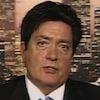
Professor, Department of Criminology and Criminal Justice, The University of Alabama
Dr. Lankford’s research focuses on mass murder, mass shootings, and terrorism, including offenders’ psychological tendencies, suicidal motives, and fame-seeking behavior, along with the strategies that might prevent their attacks. He is the author of Human Killing Machines and The Myth of Martyrdom, and his work has been featured by CNN, The New York Times, and NPR, among many others. From 2003 to 2008, he helped coordinate anti-terrorism efforts in conjunction with the U.S. State Department’s Anti-Terrorism Assistance program.
Building Accountability Into the Evidence
Forensic findings carry enormous weight in court, which is exactly why the field has faced hard questions about reliability. In 2009, a National Research Council report called for major reforms in how forensic science is practiced in the United States. Some practitioners had already started building safeguards into their own work.

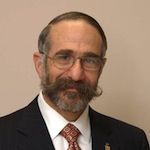
Founder & Chairman, The Forensic Panel
Dr. Welner founded The Forensic Panel in 1998 as the first forensic practice in the United States to build prospective peer review into its assessments, and he continues to lead it as chairman. He is board-certified in psychiatry, forensic psychiatry, psychopharmacology, and disaster medicine, has consulted and testified in high-profile cases including the Elizabeth Smart kidnapping case, and leads research on the Depravity Standard, an evidence-based effort to distinguish the worst crimes.
What Private Investigation Looks Like From the Inside
Not every investigator carries a badge. Private investigators handle litigation support, insurance claims, background screening, and surveillance for law firms, businesses, and families, and most states require a license to do the work. It’s a career many criminal justice students don’t hear about until well after graduation.

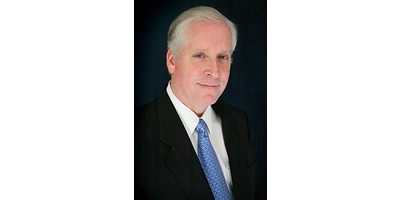
Founder & President, McLaughlin Investigative Group, Inc.
Chuck McLaughlin started in private investigation right out of the University of Massachusetts Amherst, doing part-time surveillance on domestic and workers’ compensation cases. Within three years he was vice president of a Boston investigative firm, and in 1999 he founded McLaughlin Investigative Group, now based in Andover, Massachusetts, which also runs the EmploySecure.com pre-employment screening service. He has served as a board member and Ambassador of the World Association of Detectives, one of the oldest international associations of private investigators.
The Interview Series: Voices From Across the Justice System
Lankford, Welner, and McLaughlin are three of the 15 professionals in our expert interview series. The rest of the series covers just as much ground: FBI intelligence analysis, probation and parole, forensic pathology, criminalistics, digital forensics, community mediation, police legal advising, and more.
Many of these interviews were conducted years ago, so the titles and affiliations below reflect each person’s role at the time we spoke with them.






You can browse the full series on our expert interviews page.
From a DEA Request to a Graduate Program
Law enforcement intelligence barely existed as an academic discipline a few decades ago. Today it shapes how agencies investigate crime and counter terrorism, and one of the people who built the field has spoken with us about it.

Professor, School of Criminal Justice · Director, Intelligence Program, Michigan State University
A former Kansas City, Missouri, police officer, Dr. Carter developed Michigan State’s master’s program in law enforcement intelligence and analysis, which traces back to a Drug Enforcement Administration request in the late 1980s. He is an instructor in the Bureau of Justice Assistance State and Local Anti-Terrorism Training program and the author of Law Enforcement Intelligence: A Guide for State, Local and Tribal Law Enforcement, and he spoke with us for our spotlight on Michigan State’s intelligence program.
Leading a Police Department and a Sheriff’s Office
Most people who start in patrol never imagine running the agency. For students weighing a career in law enforcement, hearing from someone who rose through the ranks to lead a big-city police department, and then a county sheriff’s office, shows how far that path can go.
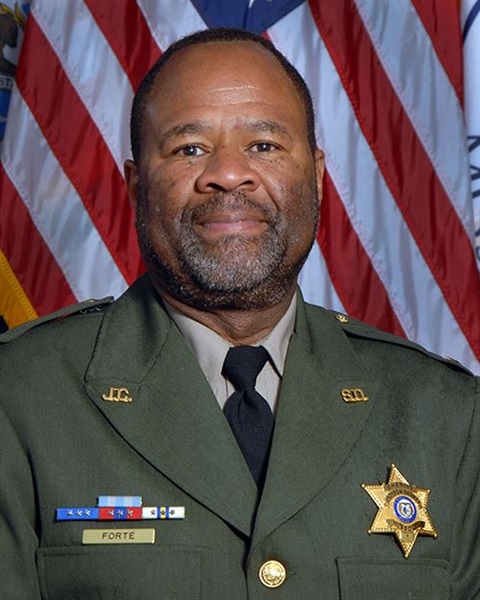
Sheriff, Jackson County, Missouri · Former Chief of Police, Kansas City, Missouri Police Department
Sheriff Forté has more than 30 years in law enforcement. He was the first African American Chief of Police in Kansas City, Missouri, leading the department from 2011 to 2017, and is now the 43rd Sheriff of Jackson County and the county’s first African American sheriff. He is a graduate of the FBI National Academy and the FBI National Executive Institute, and a member of the Major Cities Chiefs Association and the Police Executive Research Forum. He spoke with us about his law enforcement career and his advice for aspiring police officers.
Faculty, Practitioners, and Students Who Have Weighed In
Beyond the interview series, educators, recruiters, clinicians, and students have answered our questions for the degree and career guides on this site. Titles reflect each person’s role at the time they spoke with us.
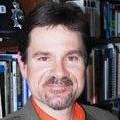
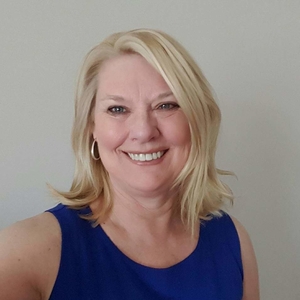
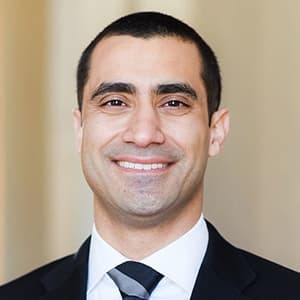
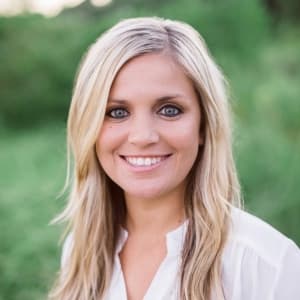
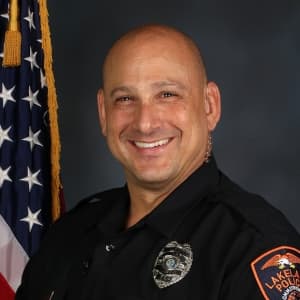

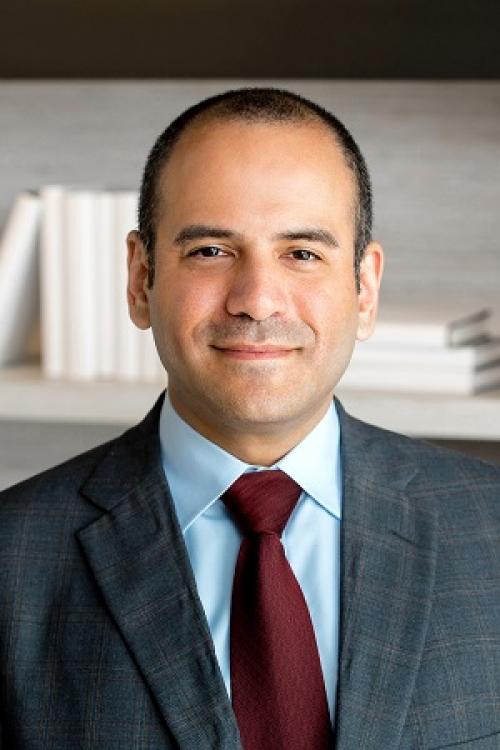

Guest Contributors: The Concordia University, St. Paul Scholars’ Forum
Faculty from Concordia University, St. Paul’s Department of Criminal Justice have written for our Scholars’ Forum, a series brought to you by the university, bringing an academic perspective to emerging topics in criminal justice. Their articles carry their own bylines. Concordia is also one of the schools that advertises on this site.



Our Editorial Team
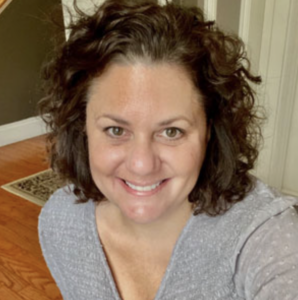
Our degree and career guides are researched and written by the Criminal Justice Programs Editorial Team, and articles by named authors, including the Scholars’ Forum pieces above, carry those authors’ own bylines. The editorial team’s job is to take everything above, the research, the agency requirements, and the interviews, and turn it into something a prospective student can actually use to make a decision: which degree fits which career, what a particular state or agency really requires, and what the work looks like day to day.
What You’ll Find Here
This site covers criminal justice education and careers across law enforcement, the courts, and corrections:
Our Editorial Standards
We don’t summarize secondary sources and call it research. Career outlook and salary figures come from the U.S. Bureau of Labor Statistics, including its Occupational Outlook Handbook and Occupational Employment and Wage Statistics program. Licensing, training, and hiring requirements are checked against the bodies that set them: state peace officer standards and training commissions, state licensing authorities, and federal agencies’ own hiring pages.
Requirements in this field vary a great deal by state and by agency, so we name the state or agency we’re describing instead of presenting one set of rules as universal.
Our interviews appear as the interviewees gave them. Because many were conducted years ago, titles and affiliations reflect the time of the interview, and where facts have changed since, we add an editor’s note rather than rewriting anyone’s answers.
Everything we publish follows our editorial standards: where our facts come from, how we use AI, and how each article is fact-checked by a person before it’s published. If you find something that looks outdated, please let us know using the contact information on that page.
Find Criminal Justice Programs Near You