
Latent Print Examiner: Career Requirements and Salary
Updated September 23, 2026
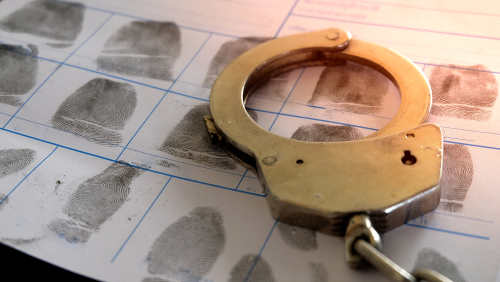
A latent print examiner lifts, enhances, and compares fingerprints from crime scenes against existing databases to identify suspects. Requirements vary by agency, from an associate degree with experience to a bachelor’s degree in forensic science. IAI certification is a voluntary credential some employers require and others prefer. Processing errors can compromise evidence and be challenged in court.
Fingerprints don’t lift themselves off a doorframe, and they don’t match themselves against a database either. That’s the job: you’re the person standing between a print on a gun grip and a name in a case file. If you’re weighing a career in forensic identification, here’s what the work actually involves and how agencies hire for it.


What a Latent Print Examiner Actually Does
Forget the image of pressing ink onto a card. Most of your time goes to lifting prints from surfaces that were never meant to hold them: door frames, gun grips, dashboards, glass. You dust, lift, and photograph what’s there, then electronically enlarge the print and run it against existing databases looking for a match.
The margin for error is thin. Errors in processing or documentation can compromise evidence and may be challenged in court, which is part of why this field takes the training it does. You’ll also need to keep up with technology as it evolves; the imaging and comparison tools examiners use now look nothing like those from even a decade ago, and agencies expect you to adapt as new ones roll out. If pattern evidence interests you beyond prints, blood spatter analysis is a closely related specialty worth a look.
The stakes are real. According to the Federal Bureau of Investigation, latent print examiner Christopher Dolan helped identify a suspect in a 1983 Massachusetts cold-case killing when a fingerprint search in 2010, 27 years later, produced a match. The eventual defendant pleaded guilty to manslaughter. That’s the kind of work a career’s worth of careful processing makes possible. Forensic evidence cuts both ways, too: read Forensic Science and the Steven Avery Case for a look at how the same kind of evidence work has been used to challenge a conviction.
How to Become a Latent Print Examiner
Most latent print examiners are hired by police departments, crime labs, and local investigative agencies, and hiring requirements vary substantially by employer and jurisdiction. There is no single formula. Some agencies accept an associate degree plus relevant experience or years of hands-on experience alone. Others, like Fort Worth, Texas, now require a bachelor’s degree with coursework in physical or forensic science, plus at least one year of forensic laboratory or latent print experience. Fort Worth’s posting also requires compliance with Texas Forensic Science Commission standards, since Texas operates a state licensing framework for several forensic disciplines, including latent print analysis. Where a state licensing body exists, its requirements sit alongside, not underneath, whatever the hiring agency asks for.
The International Association for Identification certifies latent print examiners through its Certified Latent Print Examiner (CLPE) credential, but this certification is voluntary, not a nationwide license. Some employers require it (Alabama requires it for its Latent Print Examiner classification), some list it as preferred (a recent Torrance, California posting described it that way), and others don’t mention it at all. Check your target agency’s own requirements rather than assuming it’s mandatory everywhere.
If you do pursue it, the current IAI standard calls for 176 hours of approved training for initial Latent Print certification, including 16 hours of qualified-testimony training completed within the prior five years, plus two years of relevant experience. The training must come from IAI-approved programs, and no more than 80 of those hours may be from conference attendance. The initial exam is an eight-hour proctored test: a written portion requiring an 85% passing score, plus a comparison test where you work 15 latent prints against six sets of exemplars, reaching at least 12 correct conclusions with zero incorrect ones. Certification runs on a five-year cycle, renewed through 80 professional development credits earned in the preceding five years, plus a recertification exam.
The FBI also offers fingerprint and biometric training, including courses at its CJIS Division facility in Clarksburg, West Virginia, available to federal employees and to law enforcement and criminal justice agencies with an authorized ORI. Course lengths and offerings vary, and the courses are a resource for building casework skill once you’re already working in an authorized agency, not a substitute for a hiring agency’s own requirements.
Latent Print Examiner Salary and Job Outlook
The Bureau of Labor Statistics groups latent print examiners under Forensic Science Technicians (SOC 19-4092), and O*NET lists latent print examiner as one of the job titles reported under that broader occupation. As of the May 2025 BLS wage data, the national median salary for Forensic Science Technicians is $72,060 a year, with the middle half earning between $57,830 and $94,520. These figures cover the occupation as a whole, not latent print examiners specifically, so treat them as a reasonable benchmark rather than an exact figure for this specialty.
The field is growing fast. Per the Bureau of Labor Statistics Occupational Outlook Handbook, Forensic Science Technician employment is projected to grow 13% between 2025 and 2035, much faster than the average occupation, with about 2,800 openings a year nationally, most of them from workers transferring out or retiring rather than from net new positions.
May 2025 US Bureau of Labor Statistics salary figures for Forensic Science Technicians. 2025-2035 job growth projections from the same Bureau of Labor Statistics source. Figures reflect national data, not school-specific information. Conditions in your area may vary. Data accessed September 2026.
Frequently Asked Questions
What does a latent print examiner do day-to-day?
You lift, enhance, and photograph fingerprints from crime scenes and evidence, then compare them against existing databases to identify suspects or confirm a victim’s identity. Most of the job happens away from the ink-and-card image people carry around, working surfaces like door frames, glass, and weapons instead.
Do you need a college degree to become a latent print examiner?
It depends entirely on the agency. Some accept an associate degree plus relevant experience, or several years of hands-on experience with no degree beyond high school. Others, like Fort Worth, Texas, now require a bachelor’s degree with forensic or physical science coursework plus lab experience. Check the specific agency’s posting rather than assuming one path applies everywhere.
Is IAI certification required to work as a latent print examiner?
Not universally. The Certified Latent Print Examiner credential from the International Association for Identification is a voluntary professional certification. Some employers require it, some prefer it, and some states run their own licensing frameworks alongside it. Confirm what your target agency and state actually require.
What does IAI certification involve?
The current standard is 176 hours of IAI-approved training, including 16 hours of qualified-testimony instruction, plus two years of relevant experience, followed by an eight-hour exam covering written material and a hands-on print comparison test. Certification is valid for 5 years and is renewed through continuing education credits and a recertification exam.
How much does a latent print examiner make?
As of the May 2025 BLS wage data, the national median for Forensic Science Technicians, the broader category latent print examiners fall under, is $72,060 a year. Pay varies by agency, region, and whether you’re working for a large metro crime lab or a smaller local one.
Is latent print examiner a growing career field?
Yes. The BLS projects Forensic Science Technician employment to grow 13% between 2025 and 2035, well above average, with about 2,800 openings projected each year nationally.
Key Takeaways
- Requirements vary by agency, not by formula – Some agencies hire with an associate degree and experience or years of hands-on work alone. In contrast, others, such as Fort Worth, now require a bachelor’s degree in a related science, plus lab experience. Check the specific posting.
- IAI certification is voluntary, not universal – Some employers require the Certified Latent Print Examiner credential, some prefer it, and some don’t ask for it at all. State licensing frameworks, where they exist, sit alongside it.
- Certification is a real-time commitment – The current CLPE path calls for 176 hours of approved training, two years of experience, an eight-hour exam, and renewal every five years through continuing education.
- The pay reflects the specialization: the national median for Forensic Science Technicians is $72,060 per year (May 2025 BLS data), and the field is projected to grow 13% through 2035.
If forensic identification work interests you but you want the broader picture of degree paths and career options in the field, our forensic science degree guide covers the full range of specialties this career sits inside.