Forensic Serologist: How to Become a Crime Lab Specialist
Updated September 28, 2026
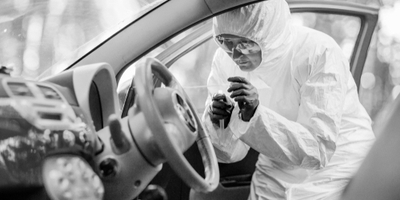
A forensic serologist identifies and tests bodily fluids like blood, semen, and saliva recovered from crime scenes, usually starting with a bachelor’s degree in biology, chemistry, or forensic science. Most work inside a lab, testify in court as expert witnesses, and earn a median $72,060 a year as of May 2025 BLS data. Licensing requirements vary by state.
Crimes rarely get solved on witness testimony alone. Physical evidence, and increasingly DNA, is what turns a suspicion into a case a prosecutor can actually take to trial, as anyone who’s watched a show like Dexter has picked up on, even if the TV version skips most of the lab work. A forensic serologist is the specialist inside that process who deals specifically with bodily fluids: blood, semen, saliva, and other biological material that can place someone at a scene or clear them from one. It’s a narrower role than “crime scene investigator” generally, since plenty of CSIs handle prints, ballistics, and photography without ever running a serology panel. Blood evidence in particular splits into two separate specialties: serologists identify and test the fluid itself. In contrast, a blood spatter analyst studies the pattern it left behind to reconstruct what happened. Here’s what the job actually involves and how people get into it.


What a Forensic Serologist Does
Serology work involves identifying, collecting, and testing bodily fluids in a way that withstands cross-examination. That’s a higher bar than it sounds. Analysts handling blood and semen work under biosafety and exposure-control procedures, since those fluids are treated as potentially infectious material and the right precautions depend on what you’re handling. Contamination is the bigger threat to the case, though. A crime scene sample is frequently the only one that will ever exist. Damage it during collection or storage, and the case may lose the evidence that would have proven it.
Forensic biology work is generally a lab function. Crime-scene personnel collect and preserve the evidence, then submit it to serology or forensic biology staff for analysis. You’ll run screening or presumptive tests to assess whether a particular fluid may be present, then confirmatory methods where the lab uses them, before any material goes on to DNA analysis, sometimes by you and sometimes by a separate DNA analyst depending on the lab’s structure. Expect to write technical reports translating your findings for people with no lab background, and expect to be called into court to defend those findings under cross-examination. Serologists routinely testify as expert witnesses, and a case can turn on how clearly you explain a result to a jury.
How to Become a Forensic Serologist
Start With a Science Degree
The entry point is a bachelor’s degree in a physical science, biology, or forensic science, per the BLS, with chemistry counted as a physical science. Coursework in anatomy and physiology, organic chemistry, and pathology builds the foundation you’ll need for bloodwork and DNA analysis later. A degree with heavy lab time and hands-on biology work carries real weight with hiring labs, sometimes enough to substitute for a separate forensic-specific credential. If the role includes forensic DNA analysis, FBI quality standards add specific coursework requirements on top of the degree: at least nine credit hours in biology or chemistry covering DNA analysis fundamentals, plus statistics or population genetics for analysts qualified since July 2020.
A Master’s Degree Isn’t the Norm, But It Matters for Some Roles
A master’s degree isn’t generally required for entry-level serology work. It becomes relevant for advanced positions. FBI standards, for example, require the Technical Leader of a covered forensic DNA lab, a senior oversight role, to hold at least a master’s degree in biology, chemistry, or a forensic science-related field. If you want a master’s anyway, look for a program specifically built around DNA analysis and forensic serology. Virginia Commonwealth University’s forensic science graduate curriculum is a useful benchmark: Forensic Microscopy, Professional Practices and Expert Testimony, and Instrumentation in Forensic Chemistry are among the core courses.
Licensing Varies by State, Certification Is Voluntary
There’s no single nationwide license for this work, but requirements vary by state and employer. Texas, for example, requires forensic biology analysts to hold a state forensic analyst license, with its own education, exam, and proficiency-testing requirements. Check what your target state and lab require before you assume none of this applies to you. Beyond any state requirement, you’ll get agency-specific training in that lab’s exact procedures, since a sample mishandled under the wrong protocol is as good as lost. If you want a credential on top of that, the American Board of Criminalistics offers voluntary certifications relevant to this work, including Biological Evidence Screening (ABC-BIO) and Forensic DNA (ABC-DNA), though most agencies weigh your education and hands-on experience well above any certificate.
Forensic Serologist Salary and Job Outlook
The BLS doesn’t track “forensic serologist” as its own occupation. The closest tracked category, and the one that covers this work, is Forensic Science Technicians (SOC 19-4092), which had a median annual wage of $72,060 as of May 2025. Among major industries employing the occupation, state government (excluding education and hospitals) paid the highest median at $74,740, ahead of local government at $70,050.
The outlook is strong. The BLS projects 13% employment growth for forensic science technicians from 2025 to 2035, well ahead of the 3% average across all occupations, with about 2,800 openings expected each year. Many of those openings come from workers transferring to other occupations or leaving the labor force, such as through retirement, rather than from pure growth. BLS also points to heavy caseloads at state and local labs and ongoing scientific and technological advances as reasons demand keeps climbing.
Careful, methodical work matters more here than in almost any other lab role. Palm Beach County’s forensic biology program has used serological screening and DNA analysis in cold-case and sexual-assault investigations, including federally supported efforts to identify biological evidence suitable for testing, the kind of outcome that depends entirely on evidence handled the first time correctly. Jurisdictions nationwide continue working through previously unsubmitted or partially tested sexual-assault kits. However, there’s no single reliable national count of how many remain. That backlog work depends on forensic biology staff who can get a usable result from a sample that may be years old.
May 2025 US Bureau of Labor Statistics salary figures for Forensic Science Technicians. Job growth projection (2025-2035) also from the U.S. Bureau of Labor Statistics. Figures reflect national data, not school-specific information. Conditions in your area may vary. Data accessed September 2026.
Frequently Asked Questions
Is a forensic serologist the same thing as a crime scene investigator?
Not exactly. A crime scene investigator’s role can include collecting fingerprints, photographs, and other evidence at a scene. At the same time, a forensic serologist specializes in identifying and analyzing bodily fluids like blood and semen, usually in a lab rather than in the field.
Do I need a master’s degree to become a forensic serologist?
No, not for entry-level work. A bachelor’s degree in physical science, biology, or forensic science is the typical entry point. A master’s degree matters more for advanced roles, such as the Technical Leader position at a forensic DNA lab, which FBI standards require to hold at least a master’s degree.
Is a license or certification required to work as a forensic serologist?
It depends on your state. There’s no single nationwide license, but some states regulate this work directly. Texas, for instance, requires forensic biology analysts to hold a state license. Beyond that, the American Board of Criminalistics offers voluntary certifications like ABC-BIO and ABC-DNA, though most employers weigh your degree and training more heavily than any certificate.
What does a forensic serologist earn?
The BLS doesn’t break out serologists separately. Still, the closest tracked occupation, Forensic Science Technicians, had a median annual wage of $72,060 as of May 2025, with state government the highest-paying major industry at $74,740.
Key Takeaways
- The role is narrower than “CSI” – a forensic serologist specializes in bodily fluids specifically, not general crime scene evidence collection.
- A bachelor’s degree is the standard entry point – physical science, biology, or forensic science, with heavy lab time counting in your favor.
- Licensing varies by state – some states like Texas require a forensic analyst license for this work, and every lab has its own procedures you’ll learn on the job regardless.
- Demand is growing faster than average – 13% projected growth through 2035, per BLS, driven by heavy government caseloads and ongoing scientific advances in forensic evidence.
Worried about paying for the degree? The scholarships guide lists awards built for criminal justice majors, with eligibility, amounts, and deadlines.
Read: Scholarships for Criminal Justice Majors and Grad Students