How to Become a Forensic Psychologist
Updated October 12, 2026

Forensic psychologists are licensed psychologists who apply clinical training to legal questions, and nearly every path runs through a doctorate (Ph.D. or Psy.D.), supervised practice hours, and a state psychology license, though the exact requirements and timeline vary by state. Clinical and counseling psychologists, the BLS category forensic psychologists fall under, earned a national median of $100,580 in May 2025.
If you like the idea of applying psychology inside a courtroom, a prison, or a competency hearing, forensic psychology puts you at that exact intersection. It’s also one of the longer paths in behavioral health: a bachelor’s degree, a doctorate, supervised practice hours, and a state psychology license, with the forensic specialty built on top of that general credential rather than licensed separately. Here’s what each step actually involves, what adjacent careers pay, and what a working forensic psychologist told us about doing it for a living.


What Is Forensic Psychology?
Forensic psychology is psychology applied to the legal system. The word “forensic” comes from the Latin forensis, “of the forum,” referring to the public forums that served as Roman courts.
You’ll find two working definitions in the field. The narrow one covers clinical work: assessing and treating the suspects, witnesses, and victims who end up inside the legal system. The broader one covers research, pulling from cognitive and behavioral psychology to study how the legal system itself shapes behavior.
What Does a Forensic Psychologist Do?
The job splits into two tracks, clinical and research, and most practitioners lean heavily toward one.
Clinical-Focused Forensic Psychology
Clinicians spend most of their time on assessment. That work includes:
You’ll communicate findings to attorneys and judges directly, and you’ll be called to testify more often than you might expect. (Building offender profiles from crime patterns gets a lot of pop-culture attention, but it’s a specialized investigative function more often performed by trained law enforcement profilers than by forensic psychologists in routine practice.)
The clinical side also includes treatment. You might:
Research-Focused Forensic Psychology
Not every forensic psychologist sees clients. Researchers, usually based at a college or university, study and publish on topics like criminal behavior, eyewitness memory, mental health law, police psychology, and sentencing. Many teach alongside their research.
Forensic Psychologist Salary
Clinical and counseling psychologists, the broader BLS category forensic psychologists fall under, earned a national median wage of $100,580 a year in May 2025, according to the Bureau of Labor Statistics (SOC 19-3033). ProjectionsCentral projects 11.1% job growth for that category between 2024 and 2034, well above the average for all occupations. That figure describes clinical and counseling psychologists broadly, not forensic specialists specifically, and actual forensic pay varies widely by setting, caseload, and whether you’re salaried or paid per evaluation.
Careers Related to Forensic Psychology
Forensic psychology overlaps with several adjacent careers in the criminal justice and mental health systems, though these are separate occupations with their own education and licensing paths, not job titles you’d automatically hold as a credentialed forensic psychologist. Case managers and clinical counselors work the treatment side inside the system. Criminal profilers and jury consultants work the investigative and trial side. Victims’ advocates sit outside the system, helping people navigate it. The table below shows pay and growth for the closest matching BLS occupational category for each, where that data exists. Treat it as a proxy for the career, not a reported wage for that exact job title.
| Related Career | Closest BLS Category | Pay & Growth (May 2025 / 2024-34) |
|---|---|---|
| Criminal Case Manager | Probation Officers and Correctional Treatment Specialists | $66,270 median, +2.7% growth |
| Clinical Counselor | No matching BLS occupation in this dataset | Varies by state license type (LPC, LMHC, LCPC, etc.) and setting. A forensic psychology background doesn’t by itself authorize counseling practice. |
| Criminal Profiler | Detectives and Criminal Investigators | $93,790 median, -0.7% growth (this occupation is projected to shrink slightly nationwide) |
| Jury Consultant | No distinct BLS occupation | Typically paid per case rather than salaried — no standardized growth data is available |
| Victims’ Advocate | Social Workers, All Other | $71,900 median, +3.8% growth |
May 2025 US Bureau of Labor Statistics salary figures for Clinical and Counseling Psychologists, Probation Officers and Correctional Treatment Specialists, Detectives and Criminal Investigators, and Social Workers, All Other. Long-term (2024-34) job growth projections from the US Department of Labor-sponsored resource, ProjectionsCentral. Figures reflect national data, not school-specific information. Conditions in your area may vary. Data accessed October 2026.
Steps to Becoming a Forensic Psychologist
Becoming a forensic psychologist takes a postgraduate degree, supervised experience, and typically licensure. Here’s the general path. The exact requirements and order of a few steps depend on your state.
1. Obtain a Bachelor’s Degree
There’s more than one route in, but step one is usually the same: earn a bachelor’s degree from an accredited college. You don’t have to major in psychology, though some graduate programs only accept applicants who did.
Choosing a Forensic Psychology Bachelor’s Program
Few schools offer a degree labeled “forensic psychology” at the undergrad level. Your realistic options: major in psychology with a criminal justice minor, major in psychology with a forensic focus, or build a similar combination yourself.
Expect general psychology courses, child psychology, human development, cognitive psychology, alongside forensic-leaning courses like sociology of crime and criminal psychology. Most undergrad psychology programs run four years full-time.
2. Earn an Advanced Degree (Culminating with a Doctorate)
A doctoral degree is the standard path to independent practice as a licensed psychologist, and most states reserve the title “psychologist” for people who hold one and are licensed, though which degrees qualify and how the title is protected depends on your state’s psychology practice laws. There’s no separate state license for “forensic psychologist.” The underlying credential is a general psychology license, and forensic work is a specialty you build on top of it.
About Master’s Programs in Forensic Psychology
A separate master’s degree isn’t required before applying to a doctoral program, but some candidates pursue one anyway to strengthen their application, especially if their bachelor’s didn’t cover much forensic coursework.
A master’s curriculum trains you to work with witnesses, victims, and offenders, and walks you through how the legal system actually operates. Expect courses like psychopathology, criminal assessment, and domestic violence. Most master’s programs take two years.
Selecting a Doctoral Program in Forensic Psychology
Ph.D. programs lean toward research and teaching. Psy.D. programs lean toward clinical work. Dedicated “forensic psychology” doctorates are rare, so most students choose a clinical psychology Ph.D. or Psy.D. with a forensic concentration, or a legal psychology doctorate instead. Worth checking before you apply: the APA accredits doctoral programs in clinical psychology, but forensic psychology itself is a specialty area rather than its own accredited category.
Coursework typically covers social psychology, criminology, statistics, and topics including:
Programs generally take four to eight years to finish, depending on the specific program.
3. Gain Supervised Experience
After your doctorate, you’ll need supervised professional experience before you’re eligible for licensure, typically split between a predoctoral internship and postdoctoral hours, though the exact amount, timing, and mix depend on your state psychology board, not on a single nationwide rule. The APA doesn’t issue licenses or set one universal supervised-experience requirement. That authority sits with each state’s licensing board. APA’s overview of forensic training is a reasonable starting point for understanding what this stage generally involves.
4. Obtain State Licensure
Whether and how you need to be licensed is governed by your state’s psychology practice and title-protection laws, which vary by state and by the specific duties and title involved. Most states require a doctoral degree, a defined number of supervised practice hours, and a passing score on the Examination for Professional Practice in Psychology (EPPP), a standardized exam administered through the Association of State and Provincial Psychology Boards (ASPPB). Many states also require a separate jurisprudence or state-law exam. Your actual license comes from your state’s psychology licensing board, not from APA, ASPPB, or ABFP. ASPPB is an association of the state boards that administers the EPPP on their behalf, but it isn’t itself a licensing authority.
APA publishes a general overview of how licensure typically works, including the kinds of settings where exemptions sometimes apply, but exemption rules vary by state and by the exact role, so confirm with your target state’s board rather than assuming one applies.
Visit the Association of State and Provincial Psychology Boards to find your state’s specific licensing board and requirements.
5. Consider Board Certification
Board certification isn’t required to hold a psychology license or to practice forensic work, but some psychologists pursue it as an added specialty credential. It’s administered through the American Board of Professional Psychology (ABPP), with the American Board of Forensic Psychology (ABFP) serving as ABPP’s forensic specialty board. The process is open only to psychologists who are already licensed. It generally involves meeting ABPP’s general and forensic-specific eligibility requirements, submitting a practice sample for review, and passing a written exam followed by an oral exam before a panel of board-certified examiners. Exact requirements and fees are set by ABPP and do change, so confirm the current process directly with ABPP before applying rather than relying on this or any secondhand summary. Board certification signals that a licensed psychologist has met ABPP’s peer-reviewed standard for the specialty. Courts decide expert-witness qualification case by case, and certification doesn’t itself confer that status.
Online Forensic Psychology Degrees
Online programs offer more flexibility than an on-campus track, since you can often study from home and around a job.
Accredited online bachelor’s and master’s degrees in psychology or criminal justice are widely available. Online doctoral programs exist too, but with an important caveat: the APA doesn’t accredit any fully online doctoral program, as of this writing. It accredits only on-campus and hybrid programs that combine online coursework with in-person residencies and clinical training. Some exclusively online doctoral programs instead carry accreditation from other agencies recognized by the U.S. Department of Education, but that accreditation doesn’t by itself guarantee the program meets your state’s educational requirements for psychology licensure. State licensing boards, not accreditors, decide what counts, and their rules don’t always match a school’s own marketing. Confirm licensure eligibility directly with your target state’s psychology board, not just the school, before enrolling in any doctoral program that isn’t APA-accredited.
Personality Traits of a Successful Forensic Psychologist
Good clinical psychologists generally share a few traits:
Forensic work adds a few more requirements on top:
Forensic Psychologist Resources
A few resources worth bookmarking as you move through this field:
Expert Q&A with Dr. Emin Gharibian, Licensed Psychologist
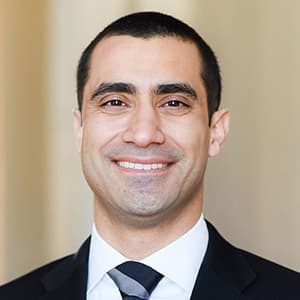
Dr. Gharibian is a licensed psychologist (PSY 29643) specializing in neuropsychological and forensic evaluations, with 10 years of education and training in clinical psychology and neuropsychology.
His training spans private practice, outpatient mental health clinics, psychiatric hospitals, forensic hospitals, and correctional facilities. He specializes in neuropsychological evaluations for conditions including dementia, Alzheimer’s disease, stroke complications, traumatic brain injury, concussions, learning disabilities, and ADHD, plus forensic evaluations for immigration hearings, civil and criminal competency, and personal injury.
In addition to his private practice Verdugo Psychological Associates, he’s a staff psychologist and medical staff member at Patton State Hospital, a 1,500-bed maximum-security forensic psychiatric hospital. Patton houses patients under commitment types including Not Guilty by Reason of Insanity (NGRI), Incompetent to Stand Trial, Mentally Disordered Offender, and Mentally Disordered Sex Offender. He evaluates competency to stand trial, writes court reports, and testifies as an expert witness.
He’s appointed to the Los Angeles Juvenile Court Expert Witness Panel and is a member of the National Academy of Neuropsychology and the American Psychology and Law Society.
How did you become a forensic psychologist? What is your education background and work experience?
Forensic psychology requires either a Psy.D. or Ph.D. in clinical psychology. All forensic psychologists start off as generalists and then specialize through their training. It’s like your MD going to medical school, then attending residency to specialize in a field.
Graduate school for psychology can range from four to seven years depending on the program. Some Ph.D. programs can be research-heavy and be as long as six to seven years, while others are more clinically oriented and typically last four to five years. Psy.D. programs are 100% clinically focused and are typically four years, although I’ve seen some that are five years.
I attended a Psy.D. program that was four years long. While I was in graduate school, I took classes the first three years and also worked in different settings to gain experience. My first year I was in a school district, my second year I was in a juvenile prison, and my third year I was in a psychiatric hospital. I provided individual and group treatment and also completed psychological testing batteries. The last year of graduate school is our internship year and it’s basically a full-time job. I worked in a state prison for that year and started to do more evaluations and treatment with a forensic population. I went back in 2018 and also completed a two-year fellowship in neuropsychology.
After I graduated, I changed jobs to another men’s prison for a year and a half, then moved over to the state hospital system. I currently work at Patton State Hospital, which is the largest state hospital in the country. This is a forensic hospital, meaning the patients there fall under different commitment codes. Some are there for competency restoration, while others are there because they were found “Not Guilty by Reason of Insanity” or are classified as “Offenders with a Mental Disability.” I’m in California, but other states have similar commitment codes.
In addition to working at Patton, I also have a private practice where I complete forensic evaluations for criminal and civil cases and serve as an expert witness. I’m on the LA County Juvenile Expert Witness and Competency Panels.
How did you decide you wanted to become a forensic psychologist?
I decided to specialize in forensic psychology because it was the area that was most interesting to me. You have to not only know the mental health side but also the legal side. That aspect of the job was very intriguing for me. Depending on what side you are retained by (defense, prosecution, plaintiff, or court), you are there to provide your expert opinion on complex legal issues.
The field is challenging but also rewarding and fun. The evaluations I complete have a huge impact on the lives of those involved. For example, in a personal injury case, it can help the injured party get compensation or treatment. In a criminal case, the evaluation can help place the defendant in the correct treatment program or even catch defendants that are lying or exaggerating their mental illness for gaining special treatment. It’s also a specialization within psychology, so it allowed me a lot more opportunities once I left graduate school.
Describe some of the common tasks you perform as part of your job.
My job consists of completing evaluations, writing reports, and providing consultation to attorneys and the legal system as an expert witness. Evaluations consist of interviews, administering psychological or neuropsychological tests, reviewing records, writing the report, then testifying in court. In most cases, I don’t have to go to court. You usually end up in court if either side disagrees with your findings and wants to challenge them. In some cases, you have to go to court even if everyone agrees with what you said. It really depends on the specific case and the issues involved in that case.
What qualities and traits are necessary for someone who is successful in this job?
You have to have the right type of personality in this type of work. As a forensic psychologist, you’re going to be interviewing and interacting with people who have been accused of sometimes very heinous crimes (rape, murder, kidnapping, child abuse, sexual assault etc…) You might have to read very graphic police reports or look at graphic crime scenes. Not everyone can stomach or tolerate dealing with that type of content.
You need to have a high tolerance for stress but at the same time not allow your personal views to cloud your judgement. It’s important to always be objective in your work or else your credibility gets questioned and you’ll have a hard time being retained as an expert.
I think having a Type A personality is important in forensic work. Opposing counsel is always looking for a way to try to discredit your work and you need to be able to tolerate being criticized or called out. You also need to be ready to be a lifelong learner. The legal field changes constantly so you need to be willing to be up-to-date on case law, new rules/procedures, and attend lots of continuing education classes throughout your career. The learning never stops.
You need to also be excellent with people skills, interviewing skills, and reading/report writing. It all comes down to how you write your reports. If you didn’t write it down, then it didn’t happen.
Why is the field of forensic psychology important/necessary?
This response is more catered to criminal forensic work. This field is important because our jails and prisons have become our mental health treatment facilities (at least in CA). Community mental health centers can’t keep up with the demand, so many individuals with mental illness end up not getting treatment and sometimes commit crimes that they would have never completed if they had proper treatment. Forensic psychologists help bridge that gap between the legal and mental health system. The work we do helps determine and influence who gets treatment and the type of treatment they should get. It also helps protect the public from individuals who have committed crimes and continue to pose a danger to society without appropriate treatment, monitoring, or supervision. The court system relies on our expert opinions to make their decisions.
Frequently Asked Questions
What degree do you need to become a forensic psychologist?
You generally need a doctorate, a Ph.D. or Psy.D., in a qualifying psychology program to be eligible for independent licensed practice, though exactly which programs qualify depends on your state board. There’s no separate “forensic psychologist” license. Forensic work is a specialty built on top of a general psychology license. A bachelor’s in psychology isn’t required, and a terminal master’s is optional, not mandatory, along the way.
How long does it take to become a forensic psychologist?
The timeline varies by state and program, but a rough path runs about four years for a bachelor’s, four to eight years for a doctorate depending on the program, plus supervised practice hours before you’re eligible for licensure. That supervised experience can include predoctoral internship time, postdoctoral hours, or both, depending on your state board’s specific requirements.
How much do forensic psychologists make?
Clinical and counseling psychologists, the BLS category forensic psychologists fall under, earned a national median of $100,580 in May 2025. That figure describes the broader occupation, not forensic specialists specifically, and actual forensic pay varies by setting, caseload, and employer.
Do forensic psychologists work directly with criminals?
Often, yes. Many forensic psychologists work inside prisons, jails, and state psychiatric hospitals, evaluating and treating people who’ve been charged with or convicted of crimes. Others work mostly with victims and witnesses instead, or split their time between both.
Key Takeaways
- A doctorate is the standard path – Independent psychologist licensure generally requires a Ph.D. or Psy.D., though the exact licensing rules, including the title “psychologist” itself, are set state by state.
- Pay figures describe the broader occupation – The $100,580 median covers clinical and counseling psychologists generally, not forensic specialists specifically. Actual forensic pay varies by setting and caseload.
- Licensure and board certification are different things – Your state psychology board issues the license you need to practice. ABPP/ABFP board certification is an optional specialty credential layered on top of it, not a requirement.
- The category is growing faster than average – Clinical and counseling psychologists are projected to grow 11.1% through 2034 per ProjectionsCentral, well above the average for all occupations.
Before you commit to a doctoral program, talk to your target state’s psychology board about what their licensure path actually requires. Everything above is a general map, not a guarantee for your state.