
US Capitol Police Salary, Requirements & Training
Updated September 24, 2026
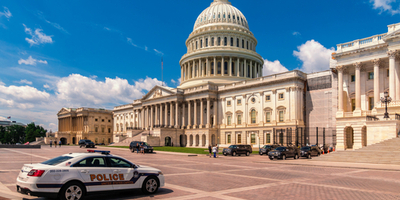
Capitol Police officers protect Congress, the Capitol complex, and everyone who visits it, clearing a background investigation, a polygraph, a psychological exam, and a Physical Readiness Test before they’re sworn in. Training runs about 37 weeks: FLETC in Georgia, then the USCP academy in Cheltenham, Maryland. Starting pay was $77,441 as of 2023 (USCP), rising to $85,325 by year two.
Working in federal law enforcement is a common goal for people coming up through criminal justice, and the US Capitol Police is one path into it that most guides skip over. You’re not just policing a building. You’re protecting the legislative branch of the US government and every visitor who walks through it, under a level of public scrutiny few other departments deal with day to day.


US Capitol Police Job Description
Capitol Police officers screen everyone entering the Capitol complex, work protective details for members of Congress, and watch for behavior that signals a threat before it becomes one. Assignments shift based on the day: fixed-post screening one shift, a mobile patrol the next, a dignitary detail during a state visit.
The job carries the same core duties as municipal patrol work, but with a stricter protocol layer. Every officer represents the United States to the people they’re screening. Visitors have to feel safe approaching you, even in a building that’s a known target.
If investigative work interests you more than protective patrol, the police detective career path follows a similar academy-first track but leads to casework instead of dignitary protection.
How to Become a US Capitol Police Officer
The US Capitol Police publishes its own minimum requirements for the job: a high school diploma or GED, and a valid state driver’s license.
After you apply, USCP runs a background investigation covering criminal history, credit history, employment, references, and academic records. Candidates who clear that screen move through additional checkpoints: USCP’s own written selection test (the Police Officer Selection Test, not a state licensing exam), a polygraph that confirms information gathered earlier in the process, a psychological exam assessing whether you can handle the stress of the job, a medical exam, and the Physical Readiness Test.
Once hired, training runs approximately 37 weeks total. New officers start with about a week of orientation at the USCP academy in Cheltenham, Maryland, then move to the Federal Law Enforcement Training Center in Glynco, Georgia for 12 weeks covering firearms, arrest techniques, criminal law, VIP protection, and counterterrorism alongside recruits from other federal agencies. From there, it’s 13 more weeks back at Cheltenham for department-specific tactics: learning to work the Capitol complex itself, not just how to be a police officer in general. The remaining weeks cover supervised field training with a training officer before new officers patrol solo.
US Capitol Police Salary and Career Outlook
USCP doesn’t publish staffing numbers or hiring targets, but security at the Capitol isn’t a budget line that shrinks. Officers start as a Private, move to Private with Training, then Private First Class as they build seniority.
| Rank | Requirement | Starting Salary |
|---|---|---|
| Private | Entry-level, upon hire | $77,441 |
| Private (1 year of service) | Completes first year | $79,348 |
| Private First Class | 2 years of service | $85,325 |
US Capitol Police salary and employment figures reflect national, agency-published data (USCP, 2023), not school-specific information. Conditions in your area may vary. Data accessed November 2023.
On top of base pay, overtime is common and officers can pick up additional duty pay for extra hours, plus a shift differential for nights, Sundays, and holidays.
Frequently Asked Questions
How long does US Capitol Police training take?
Training runs approximately 37 weeks total. New officers start with about a week of orientation at the USCP academy in Cheltenham, Maryland, then complete 12 weeks at the Federal Law Enforcement Training Center in Glynco, Georgia, followed by 13 more weeks back at Cheltenham for department-specific tactics. Supervised field training with a training officer follows before officers patrol solo.
Do you need a degree to become a Capitol Police officer?
No. USCP’s minimum requirement is a high school diploma or GED, plus a valid state driver’s license.
What disqualifies you from becoming a Capitol Police officer?
USCP’s background investigation reviews criminal history, credit history, employment, references, and academic records as part of the hiring process. The polygraph confirms information gathered earlier in the process, and the psychological exam assesses whether you can handle the stress of the job.
How much does a Capitol Police officer make?
Starting pay was $77,441 as of 2023 (USCP), rising to $79,348 after one year and $85,325 at Private First Class after two years of service. Officers can also earn overtime and differential pay for nights, Sundays, and holidays.
Key Takeaways
- Multiple hiring checkpoints – a background investigation, a written selection test, a polygraph, a psychological exam, a medical exam, and a Physical Readiness Test, all before you’re sworn in.
- No degree required to apply – a high school diploma or GED and a valid driver’s license meet the minimum.
- Training runs about 37 weeks – orientation and department-specific tactics in Cheltenham, Maryland, plus 12 weeks at FLETC in Georgia.
- Pay climbs fast early – three tiers in the first two years, plus overtime and differential pay on top of base salary.
The hiring bar here is real, but so is the seniority path: three pay tiers in the first two years alone. If Capitol Hill patrol isn’t the specific pull and investigative work is, revisit the police detective path above before deciding where to apply.