
How to Become a Border Patrol Agent
Updated September 25, 2026
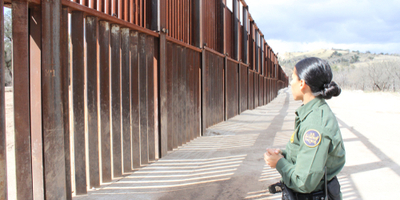
Most people qualify for U.S. Border Patrol Agent at the GL-5 level with one year of qualifying experience or a bachelor’s degree in any field. After passing CBP’s entrance exam, medical screening, fitness test, and background investigation, you’ll complete about 19 weeks of training at the Border Patrol Academy in Artesia, New Mexico, which includes Spanish-language instruction.
U.S. Border Patrol Agents work in some of the least forgiving conditions in federal law enforcement: remote desert and river terrain, rotating shifts, assignments, regular overtime, and duty stations that can sit hours from the nearest town. It’s not a job you ease into. Every agent goes through the same pipeline: the entrance exam, medical screening, fitness test, structured interview, background investigation, drug testing, and generally a polygraph, followed by months of training at the academy before ever setting foot on a patrol line. Here’s how the hiring levels work, what the pre-employment process and training actually cover, and what you can expect to earn.


What a Border Patrol Agent Actually Does
Agents are responsible for many different tasks in a normal shift, working the areas between official ports of entry rather than the crossings themselves; that’s CBP Officer territory. You’ll patrol for signs of illegal crossings, watch for weapons and drugs moving across the line, and work to keep people from being smuggled in or hidden along remote stretches of border.
Border security isn’t just a southern border job, either. Border Patrol also operates along the U.S.-Canada border, staffing sectors and stations from Washington State to Maine.
Traffic checkpoints and transportation checks fill out the rest of the job. You’ll stop and search vehicles, check buses and trains for contraband, and when you find someone or something that shouldn’t be crossing, you make the arrest, seize the evidence, and write the report. It’s procedural work built around documentation, not just interdiction.
Border Patrol Agent Hiring Levels and Qualifications
Before you’re assigned a GL level, you’ll go through CBP’s full pre-employment process: the Border Patrol Agent Entrance Exam, a medical screening, a fitness test, a structured interview, a background investigation, drug testing, and generally a polygraph exam, though some steps carry waiver or substitution provisions. Which GL level you enter at then determines your variety of levels and how fast you can be promoted.
GL-5: No Degree Required
A college degree isn’t required at GL-5. You can qualify with one year of qualifying general experience, a bachelor’s degree in any field, or an eligible combination of education and experience.
GL-7: Multiple Qualifying Paths
GL-7 applicants can qualify through specialized law enforcement or other responsible work experience; a bachelor’s degree earned with Superior Academic Achievement; one full year of qualifying graduate education or law school; or an eligible combination of experience and graduate education. Prior law enforcement work helps but isn’t the only route in.
GL-9: Experience Only
GL-9 requires one year of qualifying specialized experience. There’s no substitute for education at this level.
Training at the Border Patrol Academy
New agents attend the U.S. Border Patrol Academy in Artesia, New Mexico. CBP currently describes the academy program as 19 weeks, while the USAJOBS announcement says applicants should expect approximately 6 months of intensive training. Spanish-language instruction is included for agents who need it, built into the program rather than tacked on separately.
Border Patrol Agent Salary and Job Outlook
BLS doesn’t track “Border Patrol Agent” as its own occupation. The closest published federal category is Detectives and Criminal Investigators (SOC 33-3021), and as of May 2025 BLS wage data, that broader occupation earned a national median of $93,790 a year, not a Border Patrol Agent-specific figure. Nationally, employment in that category is projected to stay essentially flat from 2025 to 2035, per BLS’s 2025-35 Employment Projections. Separately, under the 2024-34 cycle, the category averages roughly 7,800 openings nationally each year, driven mainly by workers leaving the occupation rather than by new positions being added.
CBP’s own hiring postings are more specific to this job than the BLS proxy above. Current September 2026 Border Patrol Agent announcements list $51,632-$92,912 for GL-5/GL-7 positions and $65,545-$124,717 for GL-9/GS-11 positions, using the 2026 OPM pay tables. Actual pay depends on grade and duty location, and these advertised ranges exclude potential overtime and recruitment or location incentives.
May 2025 US Bureau of Labor Statistics salary figures for Detectives and Criminal Investigators. Employment Projections program figures (2025-35 growth; 2024-34 average annual openings) reflect national data, not school-specific information. Conditions in your area may vary. Data accessed September 2026.
2026 US Customs and Border Protection salary figures reflect nationwide federal pay scales, not school-specific information, and actual pay may vary by duty location. Data accessed September 2026.
Frequently Asked Questions
Do you need a college degree to become a Border Patrol Agent?
No. GL-5, the entry level, accepts one year of qualifying general experience or a bachelor’s degree in any field, not one or the other exclusively. Higher levels open up more paths, including graduate coursework or law school, but a degree is never the only way in.
How long does Border Patrol Academy training take?
CBP describes the program as 19 weeks; the current USAJOBS announcement tells applicants to plan for roughly six months of intensive training. Spanish-language instruction is included for agents who need it.
Do you have to speak Spanish to become a Border Patrol Agent?
It’s not a standalone hiring requirement, but it’s built into academy training for agents who don’t already speak it, since you’ll need it on the job.
What’s the difference between a Border Patrol Agent and a CBP Officer?
Border Patrol Agents work between official ports of entry, securing open border terrain. CBP Officers work at ports of entry, inspecting travelers and cargo at official crossings, airports, and seaports.
Border Patrol is one entry point into federal law enforcement. If you’re weighing options, explore DEA Agent for a comparison of hiring paths and day-to-day duties.
Key Takeaways
- A college degree isn’t required at GL-5—either one year of qualifying general experience or a bachelor’s degree in any field works.
- GL-7 has several paths in – experience, a Superior Academic Achievement bachelor’s degree, or a year of qualifying graduate study – while GL-9 requires a year of specialized experience with no education substitute.
- The entrance exam comes first. Expect a full pre-employment process: exam, medical screening, fitness test, structured interview, background investigation, drug test, and generally a polygraph.
- Training runs 19 weeks to about six months at the academy in Artesia, New Mexico, with Spanish instruction built in for agents who need it.
- Pay depends on grade and duty location. Current postings list $51,632-$92,912 for GL-5/GL-7 and $65,545-$124,717 for GL-9/GS-11, per 2026 OPM tables, before overtime or incentives.
Start with the requirements that actually gate entry, the entrance exam and your qualifying path into a GL level, before you invest time in anything else. If the cost of a degree factors into your plan, the scholarships guide for criminal justice majors is worth a look before you commit to loans.