
Forensic Technology Shaping Criminal Investigations Today
Updated September 17, 2026
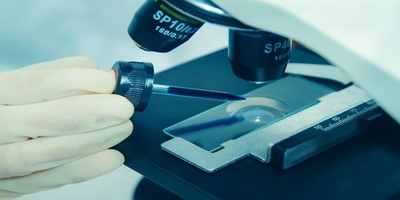
Modern forensic labs increasingly rely on investigative genetic genealogy, matching crime-scene DNA against genealogy databases that permit law enforcement searching, to generate leads in cases regular DNA databases can’t solve. Add Rapid DNA testing at booking stations, mobile-device data extraction, and 3D laser scene scanning, and today’s crime lab looks nothing like the one from a decade ago.
Every crime lab you’ve seen on television is already out of date. The technology solving real cases right now wasn’t built for a script—most of it didn’t exist even a decade ago.
That gap matters if you’re deciding whether forensic science is the right career. The job isn’t microscopes and cotton swabs anymore. Here’s what’s actually running in labs and booking stations today.


Investigative Genetic Genealogy Cracks Cases Standard DNA Can’t
Investigative genetic genealogy (IGG) starts from a different kind of DNA profile than the STR profile a routine CODIS search uses. Labs develop a dense SNP-based profile built specifically for genealogical matching, then search it against the genetic genealogy services that permit law enforcement use under their own policies, not the full universe of consumer DNA sites. Investigators find distant relatives, then work forward through public records until one name fits the age, location, and timeline of the crime. Any hit is a lead, not a conclusion: confirmatory STR DNA testing still has to tie the identified person to the original evidence.
The method reached wide public attention in 2018, when it identified the Golden State Killer after decades of dead ends. Researchers who track public IGG activity count several hundred identifications generated this way since then, though the number moves depending on how a “case” is defined and whether confirmatory testing is included. The U.S. Department of Justice’s federal policy on forensic genetic genealogy sets restrictions on which services federal investigators can use and for which crimes, reflecting how sensitive the underlying data is.
The National Institute of Justice awarded RTI International and Othram funding in 2026 (Award 15PNIJ-22-GG-04394-RESS) to study how IGG performs across different ancestral populations, since match rates aren’t uniform across every background. That’s the kind of validation work departments need before expanding a technique this powerful.
Booking-Station and Casework Rapid DNA
Rapid DNA testing has moved past demonstration, though how it works depends heavily on where you are. The FBI sets national CODIS standards and approves specific Rapid DNA systems for use, but state law decides whose DNA can be collected at arrest and under what circumstances, so implementation varies by state and by agency. In jurisdictions where qualifying arrestees are legally required to provide a DNA sample, an approved booking-station Rapid DNA system can generate a profile for CODIS searching, without a lab technician, in under 90 minutes.
Crime-scene evidence is a separate track. Effective July 1, 2025, national quality-assurance standards allow qualifying forensic (crime-scene) samples processed with Rapid DNA to be searched against or uploaded to CODIS, but only when specific requirements are met, including that the instrument and its operation fall under a CODIS laboratory’s ISO/IEC 17025 accreditation. Casework Rapid DNA runs under that accredited-lab oversight. It isn’t the no-technician booking-station process extended to crime scenes.
Mobile Devices and Digital Evidence
Mobile devices are an increasingly important source of digital evidence. Tools such as Cellebrite’s UFED are built to extract data from a wide and constantly updated range of device profiles, though what an examiner can actually pull off a given phone (deleted files, encrypted app data, location history) depends on the device, its operating system, its security state, and the extraction method available. There’s no universal capability that works the same way on every phone.
Getting into a phone still requires legal authority. Police generally need a warrant to search the digital contents of a phone, absent consent or another applicable exception to the warrant requirement. The Supreme Court’s 2014 decision in Riley v. California established that general rule, though recognized exceptions can still apply. No forensic extraction tool changes that requirement.
3D Laser Scanning Expands Crime-Scene Documentation
Crime scene units have traditionally documented a scene with a tape measure, a sketch pad, and photographs, and many still do. Where agencies have adopted 3D laser scanners, such as FARO’s Focus and Freestyle3D lines, the scanner captures the scene as a “point cloud,” a dense 3D map that can be turned into a measurable diagram far faster than hand measurements allow. In one FARO-published case study, Colorado Springs Police Department used a scanner to capture a large scene in under an hour, though actual scan time depends on the equipment, its settings, the size of the scene, and conditions on site.
In court, that data can support a measurable 3D reconstruction or a courtroom visualization instead of a flat, hand-drawn diagram. Adoption varies widely by agency budget and training, so this is a growing tool, not yet a universal one.
What This Means If You’re Weighing a Forensic Career
None of this replaces the fundamentals. Trace evidence, toxicology, and bloodstain pattern analysis still matter, and forensic science programs vary in how much DNA analysis, digital evidence, genealogy database work, or 3D modeling they actually teach alongside that foundation. If you’re comparing programs, ask what the digital forensics and DNA coursework looks like before you enroll, since curricula differ substantially by school.
Frequently Asked Questions
What is investigative genetic genealogy?
It’s a technique that builds a dense DNA profile specifically for genealogical matching, different from the STR profile used in a routine CODIS search, and runs it against genetic genealogy services that permit law enforcement searching under their own policies. Investigators use the resulting family matches, plus public records, to develop a lead, which still requires confirmatory DNA testing before it’s used as evidence.
Can Rapid DNA be used on crime-scene evidence, or just arrestees?
Both, but under different rules. Booking-station Rapid DNA has processed qualifying arrestees’ samples since 2017 in states that allow it. Since July 1, 2025, national quality-assurance standards also allow Rapid DNA on crime-scene evidence, but only when an ISO/IEC 17025-accredited CODIS laboratory operates and oversees it.
Do police need a warrant to search a phone?
Generally, yes. Riley v. California (2014) established that police need a warrant to search the digital contents of a phone, absent consent or another recognized exception to the warrant requirement. That rule applies regardless of what extraction technology is available.
What skills do digital forensics jobs require beyond a criminal justice degree?
Requirements vary by employer, job type, and jurisdiction, and there’s no single certification every employer requires. Experience with extraction platforms, familiarity with mobile operating systems, and a computer science or digital forensics credential are examples of what some employers prefer, not a universal checklist.
Key Takeaways
- IGG generates leads, not conclusions – it uses a specialized DNA profile and genealogy services with law-enforcement search policies, and any match still needs confirmatory testing.
- Rapid DNA now covers two tracks – booking-station use (state law permitting) and, since July 2025, accredited crime-scene casework, under different rules for each.
- Mobile-device extraction has limits – capability depends on the device and its security state, and a warrant is generally required unless a recognized exception applies.
- 3D laser scanning is expanding, not universal – agencies vary widely in whether they’ve adopted it and how they use it.
Curious what a forensic science program actually teaches? Compare degree levels, coursework, and where the DNA and digital evidence training shows up before you enroll.